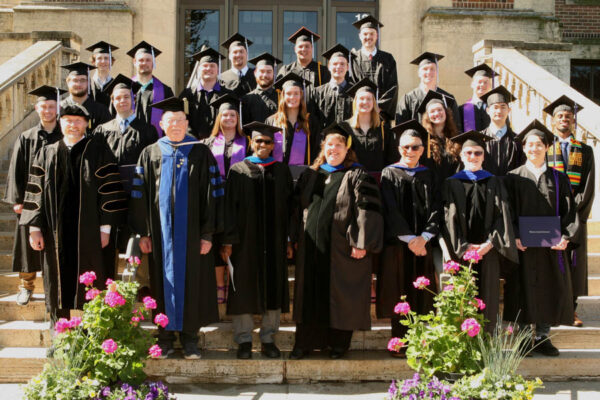
Composite Materials Engineering Student Resources
Winona State’s Department of Composite Materials Engineering (CME) provides many resources for future, current, and past CME students.
Future CME Students
Diverse Work Opportunities
With a degree in Composite Materials Engineering, you’ll have a variety of work opportunities.
Our graduates are sought out by employers in multiple industries. Some of these include:
| Industry | Composite Material Products |
|---|---|
| Aerospace | satellites, space shuttles, space telescopes, exploratory vehicles |
| Agriculture | farm equipment, body panels, cab interiors |
| Aircraft | lightweight jet, airplane parts |
| Automotive | body panels, suspension, interior parts |
| Biotechnology | prosthetics, implants, medical equipment |
| Construction | bridge materials, infrastructure applications |
| Defense | protective body and vehicle armor, jets, drones |
| Energy | poles and cross arms for power transmissions, turbine blades for wind energy |
| Marine | ships, submarines, boats, canoes, kayaks |
| Materials | new materials and manufacturing processes |
| Sporting Goods | bike frames, tennis rackets, golf clubs, fishing rods, skis, hockey sticks |
Project Lead the Way Credit
Project Lead the Way is the nation’s leading provider of science, technology, engineering, and math (STEM) programs.
Incoming students can receive credit for a Composite Materials Engineering course if they take 2 Project Lead the Way classes.
Project Lead the Way Application (PDF)Current CME Students
Scholarship Opportunities
In addition to the general scholarships at Winona State, students in the CME program can apply for many scholarships from the WSU Foundation.
Apply for WSU Foundation ScholarshipsStudent Clubs
As a CME major, you may be interested in joining a campus club or organization to get further involved, such as:
- Physics Club
- Society of Plastic Engineers
- Women in Computing & STEM
Lab Safety & Hazardous Materials
Follow safety protocol and use these precautions whenever using the CME department’s facilities and equipment.
Permission for access to the labs during non-business hours will be granted by the instructor on a case-by-case basis. Students are only allowed to enter the building if accompanied by one or more other students.
- Safety Data Sheets (SDSs) need to be consulted before working with any chemicals in the labs
- SDSs can be found in the online materials database
- No materials are to be brought into the labs without the permission of the instructor and, when granted, a copy of the accompanying SDS must be provided to the instructor
- Locate the fire extinguishers, first aid kits and other safety equipment available in the labs
- Spill Kit Instructions (PDF) — This procedure does not apply to water spills
- When operating equipment, make sure controls are set to zero before starting
- Do not exceed the manufacturer’s specifications while running equipment
- Do not leave equipment running unattended
- Disposal of hazardous waste will be done in accordance with the policies and procedures of WSU
- See the instructor and consult the procedure for information regarding the proper handling and disposal of hazardous waste
Proper clothing is always required while in the labs:
- No clothes with holes or tears
- No long hanging clothes
- Proper footwear is required at all times (no open toes)
- Eye protection is required at all times while in the labs
- Ear protection is required when operating noisy equipment
- Personal protective equipment (gloves, NIOSH/MSHA-approved air-purifying respirator with the appropriate cartridges, etc.) as recommended in the SDSs should be worn at all times while working with the respective chemicals
Eating and drinking in the labs is not allowed.
Fundamentals of Engineering Exam
Before graduation, all CME students must take the Fundamentals of Engineering (FE) exam. This is generally the first step in the process of becoming a licensed professional engineer.
This exam is a computer-based exam administered at specific times of the year by NCEES-approved Pearson Vue test centers. The closest approved test center is in Rochester, MN.
The exam includes 110 questions and takes about 6 hours to complete, allowing for a 25-minute break and time to complete a nondisclosure agreement and survey.
Check out the employment information of our recent graduates.
Explore CME Alumni