Early Childhood Elementary Education
Bachelor's
PROGRAM SNAPSHOT
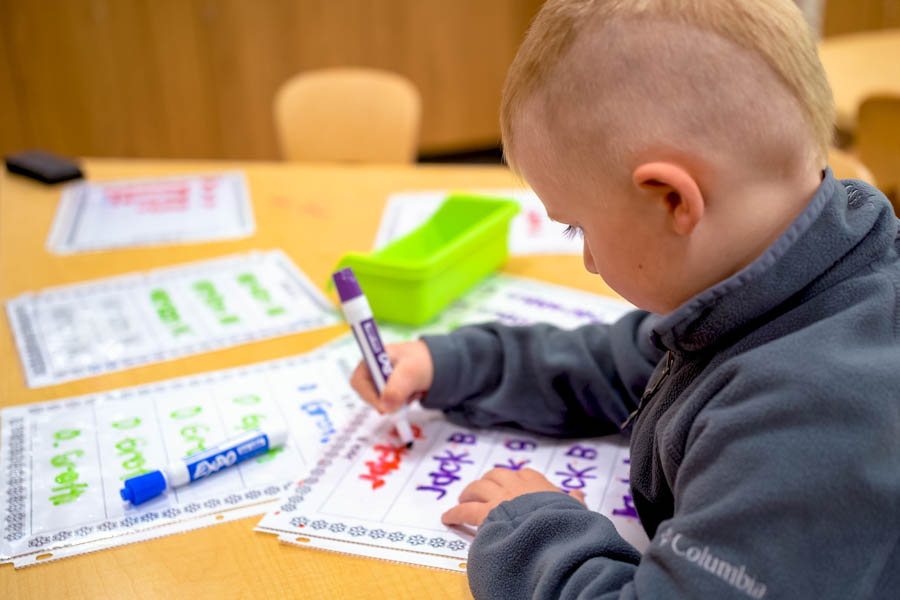
Instead of choosing just one age group, you’ll learn how to connect with kids at every stage and figure out where you shine most as an educator.
Why Study Early Childhood Elementary Education at Winona State?
Every child’s story starts somewhere. And as an educator, you get to be part of that beginning.
In the Early Childhood Elementary Education (Birth–Grade 6) program at Winona State, you’ll learn how to support kids through some of the most important years of their lives.
This bachelor’s degree stands out because it covers the full journey of childhood: from an infant’s first words to a sixth grader’s growing independence.
You’ll understand how kids develop and change over time, and how learning should evolve with them.
That means you can teach through play, creativity, and exploration in the early years, and then be able to shift into more structured, subject-based teaching as students get older.
This is a unique skillset that will make you adaptable and set you apart from other teaching candidates.
Most importantly, you’ll get hands-on experience early and often.
You’ll graduate with the expertise to step into a variety of classrooms, from early childhood settings to upper elementary grades.
You’ll also be ready to apply for both the Minnesota Early Childhood Education and Elementary Education licensures.
That flexibility means more career options—and more chances to find the environment that feels right for you.
If you’ve ever thought about becoming a teacher but aren’t sure what age group is right for you, Early Childhood Elementary Education might be your perfect fit.
This program is accredited by the Minnesota Professional Educator Licensing and Standards Board.
This program is also available through the Early Childhood & Elementary Education Department.
What Will You Learn as an Early Childhood Elementary Education Major?
As an Early Childhood Elementary Education major, you’ll learn how to blend play-based early childhood strategies with more structured elementary instruction—giving you a rare, versatile teaching toolkit.
You’ll also:
- understand how growth evolves from birth through sixth grade. This includes brain development, identity formation, and learning readiness.
- create lesson plans that adapt across subjects and age groups, so you can meet a toddler and a fifth grader exactly where they are.
- know age-appropriate classroom management approaches and how to set up classrooms (physically and emotionally) to maximize engagement, safety, and curiosity.
- learn how to identify individual student needs and strengths early on, then respond with strategies that make a long-term difference.
Winona State also offers several minors that allow you to further hone your expertise as an educator. Take your pick from Coaching and Child Advocacy Studies to Reading Instruction and Bilingual/Bicultural Education. There are even 4 middle-level minors specializing in Math, Science, Social Studies, and Communication Arts & Literature.
Aside from major- or minor-specific requirements, you’ll need to complete additional requirements through the General Education Program (GEP) to earn your degree from Winona State University.
Learn More about the GEP
Program Highlights
As you get more comfortable in the classroom through your clinical experiences, you’ll also develop a portfolio to showcase your skills to future employers.
You’ll graduate with numerous lesson plans representing all content areas—from reading and history to math and science—plus other pedagogy content.
Make a difference on campus and build your leadership skills by joining one of Winona State’s all-university committees as a student representative.
If you want to plan future orientation programs for the university, you can enhance WSU’s first-year educational experience and improve retention rates through the Orientation Committee.
Want to meet like-minded students and explore teaching? Get involved in campus organizations that share your passion.
There’s Education Minnesota Aspiring Educators, Student Council for Exceptional Children, and the Student International Literacy Association.
You might also want to check out the Child Advocacy Studies Club or Kappa Delta Pi, our honor society for Education students.
With over 100 clubs and organizations, there’s something for everyone.
Apply what you learn in the classroom by traveling around the globe. At Winona State, you can earn credit that applies to your teaching degree while exploring the world.
Learn about the South Korean education model and how it compares to the American public school system.
If you minor in Math (Middle Level Teaching), you can visit some of the most significant historical contributions that statisticians and mathematicians have made in England.
You can also check out our more than 100 other study abroad programs across 40+ countries for student teaching opportunities.
Engaging Learning Spaces
As an Elementary Education major, you’ll take most of your classes in Helble Hall. This building is part of the Education Village, which is located just a few blocks east of Main Campus.
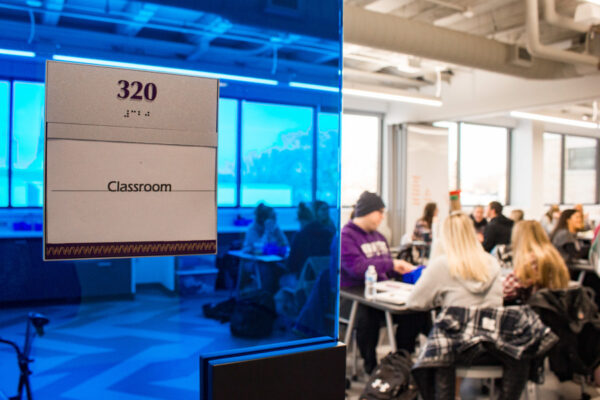
Helble Hall features multiple high-tech classrooms featuring several monitors, plus moveable desks and whiteboards that support small group collaboration and larger class instruction.
Student teachers also have access to a resource room stocked with thousands of children’s books as well as tools for teaching math and managing different classrooms.
This is a great space for students to save money and check out free materials for their field experiences that they’d otherwise have to purchase.
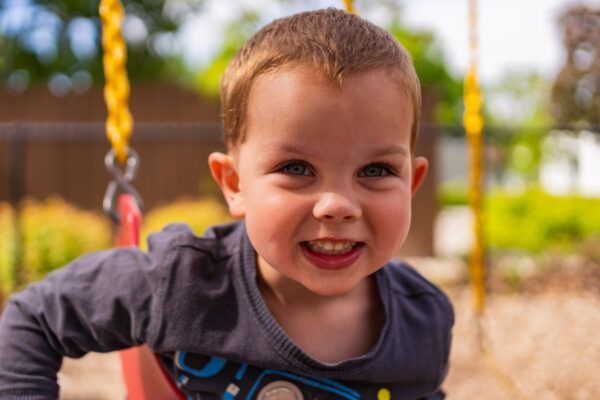
Located in Helble Hall, the Children’s Center provides education and care programs for about 200 children aged 6 weeks old through Grade 4.
Students enrolled in the College of Education can gain valuable field experience in this on-campus center.
Clinical Experiences
Our Teacher Education programs integrate several hands-on clinical experiences throughout our degrees—meaning you’re practicing the most important skills for the classroom early on and until graduation.
These opportunities will ultimately benefit both you and your future students.
Before you’ve been admitted to the Teacher Education program, you’ll complete an early clinical experience.
You can satisfy this requirement by taking a 100-level class at Winona State. Or, after graduating from high school, you can complete 15 hours of work or volunteer experience with groups of at least 2 children.
Once you’re admitted to the Teacher Education program, you’ll then be placed in a wide range of community and school settings.
You’ll observe, tutor, co-teach, and work side-by-side with experienced teachers.
You’ll also lead your own small- and large-group lessons with K-6 students across different content areas.
These field experiences will set you up for your final student teaching semester.
During your last semester in the Teacher Education program, you’ll be student teaching to prepare you for your career.
Winona State partners with more than 90 school districts to offer student teachers a plethora of experiences.
Previous students completed their student teaching locally in Winona and regionally in the Stillwater, Plainview, La Crescent, Somerset, and Oregon (WI).
Hear from Alumni
Careers & Outcomes
Because you’ll understand how learning builds from a child’s very first experiences through their elementary years, you’ll be able to adapt to nearly any classroom.
That kind of range will make you a go-to educator who can meet students where they are, adjust on the fly, and support growth at any age with confidence.
for Preschool and Childcare Center Directors in Minnesota
for Middle School Teachers in Minnesota
for Kindergarten and Elementary School Teachers in Minnesota
Learn more about what careers are possible with this major and where our alumni have gone after graduation.
Bachelor's

Bachelor's, Transfer Pathway
Bachelor's, Transfer Pathway